
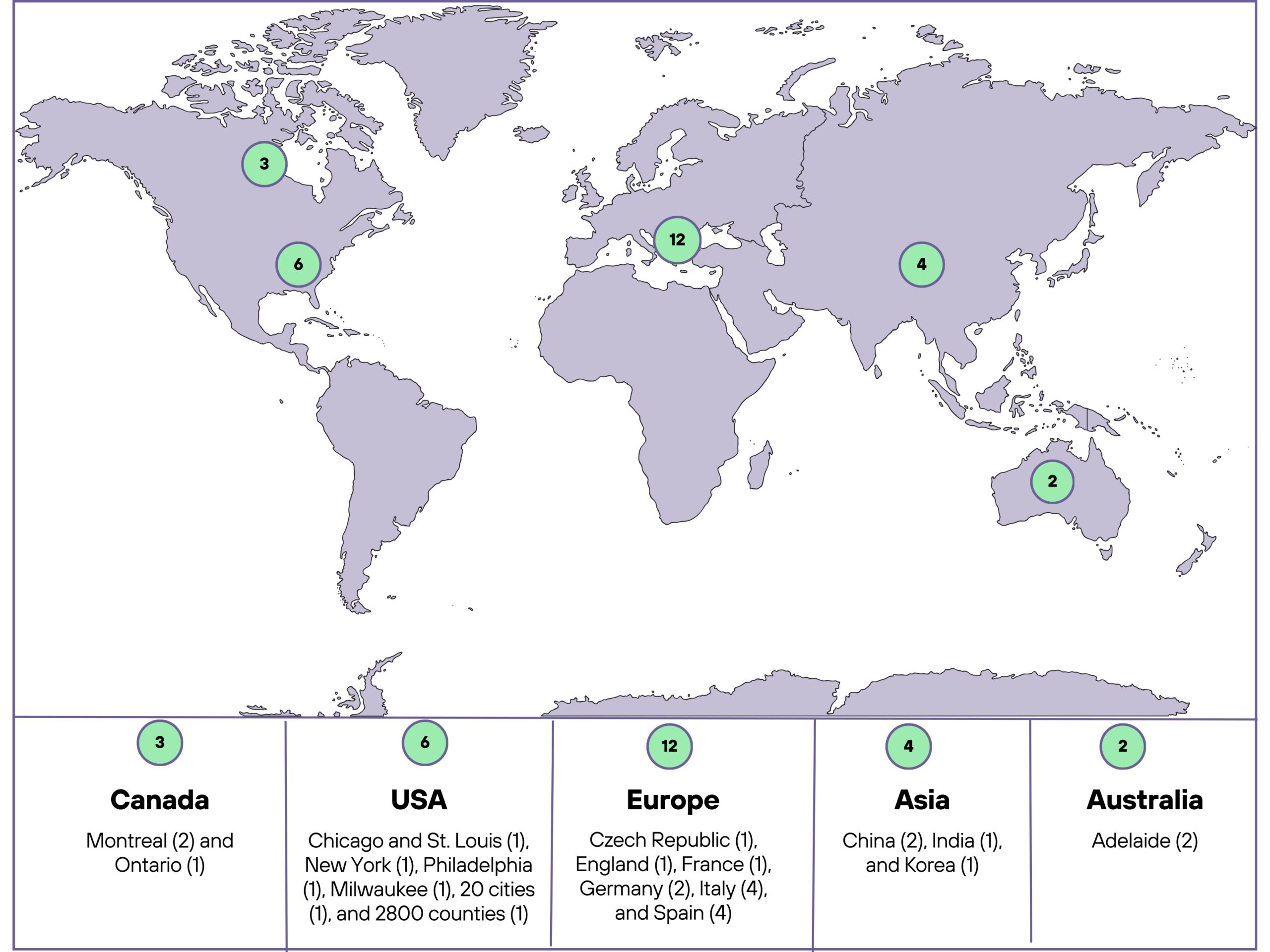
This study reviews the socioeconomic benefits of heat-health warning systems and their role in reducing heat-related health outcomes. Published in the European Journal of Public Health, the paper draws on a scoping review and interviews with climate service developers and public health representatives to assess the effectiveness, costs and implementation challenges of heat-health warning systems.
The authors found that heat-health warning systems can be a cost-effective adaptation option, particularly for reducing mortality, morbidity and health service use among vulnerable groups such as older adults. However, the review also highlights important challenges around funding, communication, data availability and reliability, interdisciplinary collaboration, and the ability to assess real-world impact.
A major finding of the study is the limited evidence base from Africa. None of the 27 studies included in the scoping review were conducted in an African setting, and the interview component included only one African stakeholder. Taken together, this points to a clear evidence gap for heat-health warning systems in Africa, including limited published evidence and limited input from African stakeholders on the design, implementation, and relevance of these systems.
The findings highlight the need for stronger regional research, improved data access, greater investment in capacity building, and more African participation in the design and evaluation of heat-health warning systems.
Read more:
Rao, S., Chaudhary, P., Budin-Ljøsne, I., Sitoula, S., Aunan, K., Chersich, M., de’ Donato, F., & Kazmierczak, A. (2025). Evaluating the socioeconomic benefits of heat-health warning systems. European Journal of Public Health, 35(1), 178–186.