
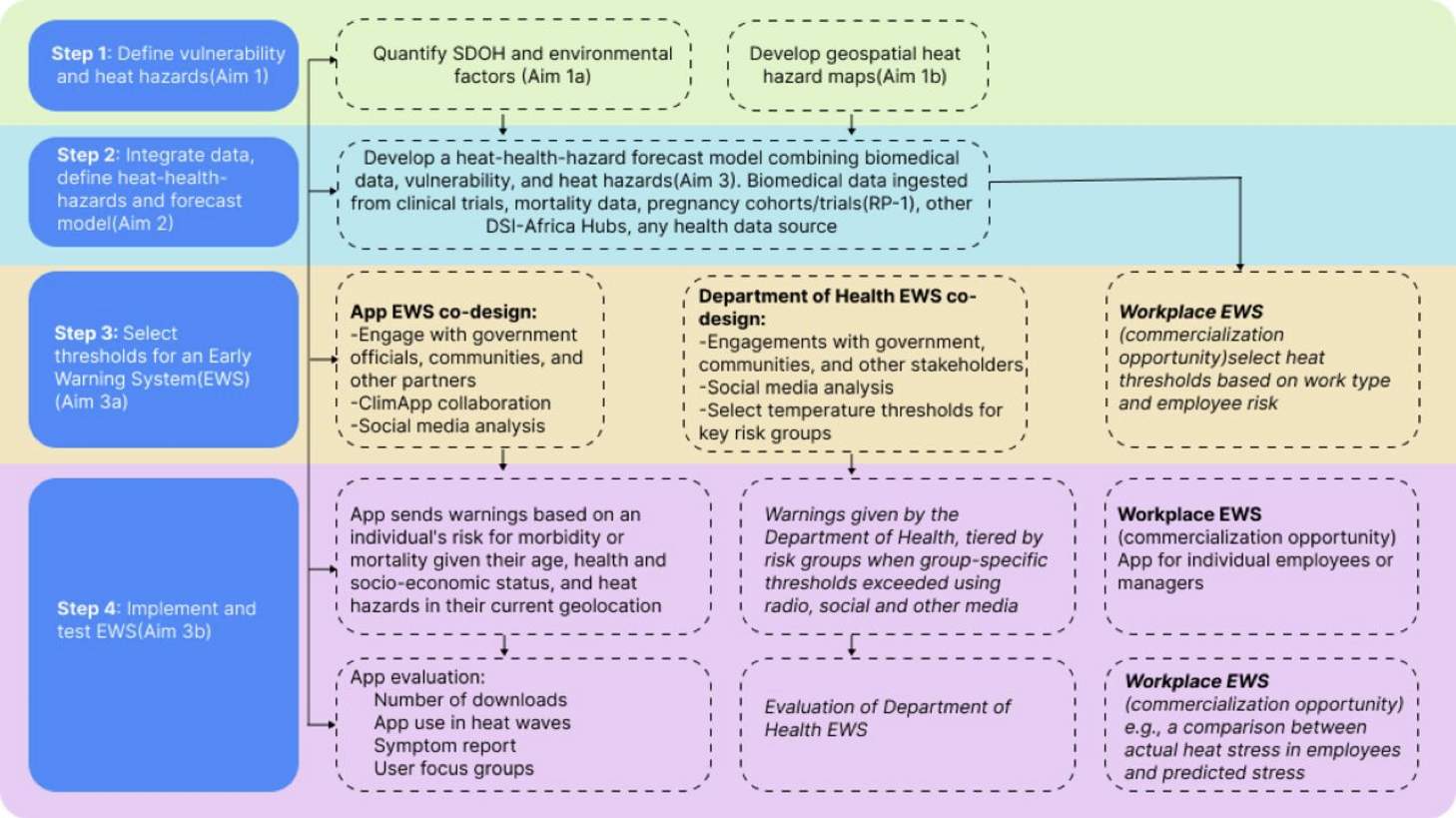
African cities, particularly Abidjan and Johannesburg, face challenges of rapid urban growth, informality, and strained health services, which are compounded by increasing temperatures due to climate change. This study aimed to understand the complexities of heat-related health impacts in these cities. The objectives were: (1) mapping intraurban heat risk and exposure using health, socioeconomic, climate and satellite imagery data; (2) creating a stratified heat-health forecast model to predict adverse health outcomes; and (3) establishing an early warning system for timely heatwave alerts. The ultimate goal is to foster climate-resilient African cities, protecting disproportionately affected populations from heat hazards.
Read more: Jack, C., Parker, C., Kouakou, Y. E., Joubert, B., McAllister, K. A., Ilias, M., … & Cissé, G. (2024). Leveraging data science and machine learning for urban climate adaptation in two major African cities: a HE²AT Center study protocol. BMJ open, 14(6), e077529. Link