As one of the newest members to join the HE2AT Center, I’ve been discovering a great deal about extreme heat’s effects on health, but also about myself and what I’m passionate about, on this journey of discovery.

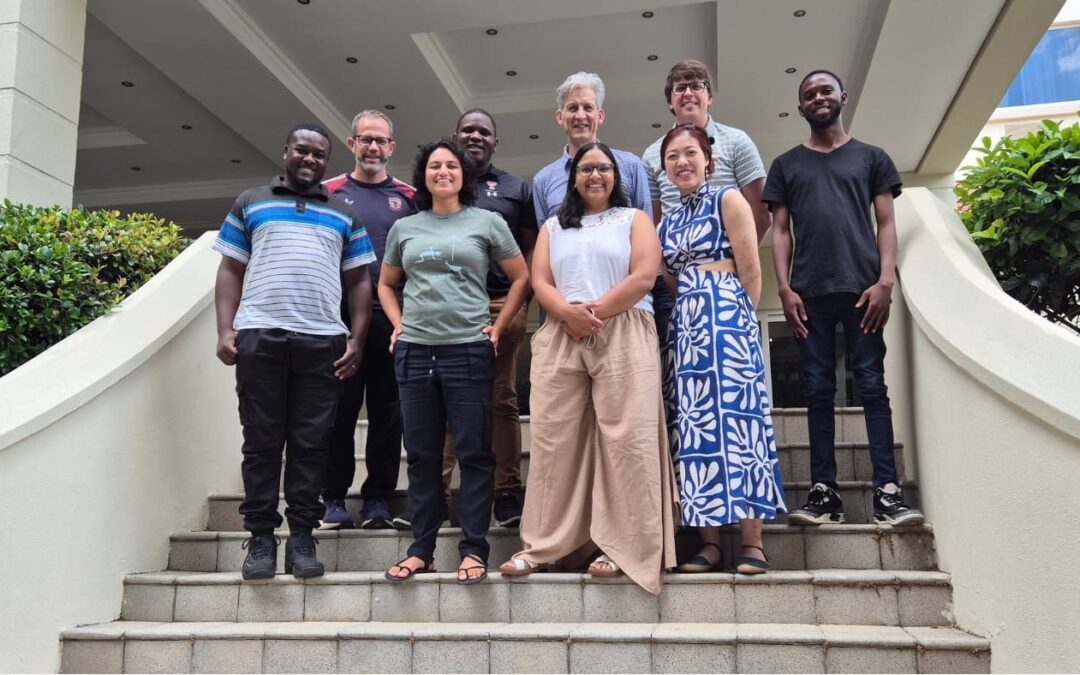
Behind every dataset, every published paper, and every heat-health model produced by the HE²AT Center, there were real people — researchers in the field, colleagues around a table, and everyday moments that rarely make it into a journal article.
Over the past five years, the HE²AT Center set out to answer a simple but urgent question: how does extreme heat affect health across Africa — and what can we do about it? That work is now reflected in a growing body of published research. Every paper on this list represents months of fieldwork, data wrangling, and collaboration across South Africa, Zimbabwe, Côte d’Ivoire and beyond. As the project draws to a close, we wanted to take a moment to look back at what this collaboration has produced.
Heat data sounds straightforward. But when you start working with it, you realise just how complicated and messy it can be – and how much accurate data matters when you’re trying to understand where people are most at risk during extreme heat events.
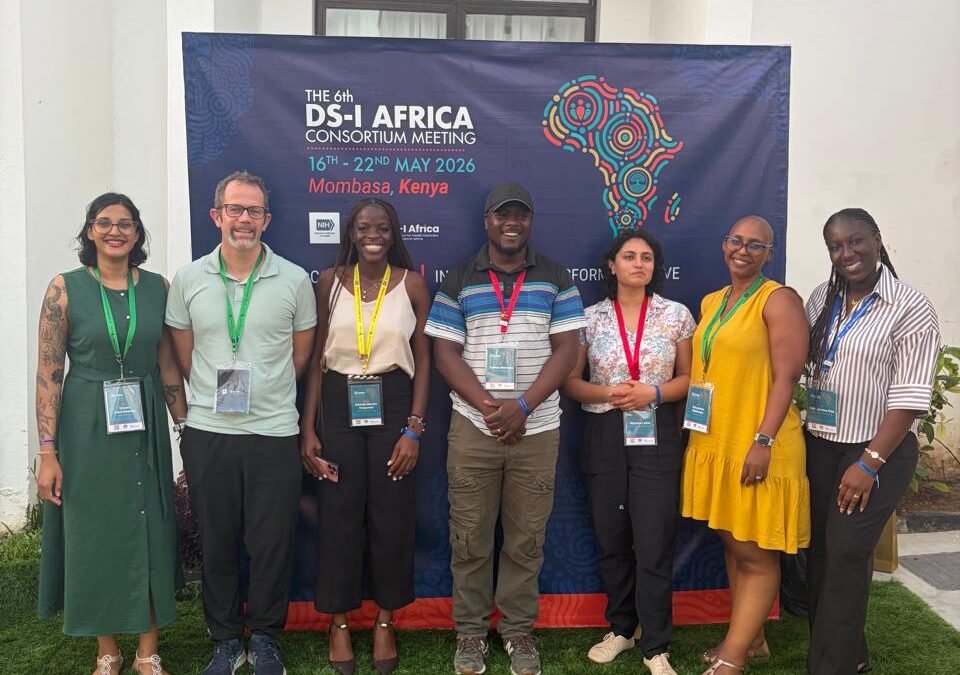
The 6th DS-I Africa Consortium Meeting took place from Friday 15 to Thursday 21 May 2026 — the final consortium meeting of the initiative. DS-I Africa is an NIH Common Fund Initiative that aims to leverage data science technologies to transform biomedical and public health research and develop solutions that improve health for individuals and populations across Africa. The HE²AT Center took part with presentations, a datathon-winning team, plenary session speakers, and a lineup of posters.
It has become increasingly clear that rising heat is having severe and widespread impacts on health and wellbeing. The link between heat and pregnancy is particularly severe — pregnant women and newborns are among those most vulnerable to these impacts.
As one of the newest members to join the HE2AT Center, I’ve been discovering a great deal about extreme heat’s effects on health, but also about myself and what I’m passionate about, on this journey of discovery.
Behind every dataset, every published paper, and every heat-health model produced by the HE²AT Center, there were real people — researchers in the field, colleagues around a table, and everyday moments that rarely make it into a journal article.
Over the past five years, the HE²AT Center set out to answer a simple but urgent question: how does extreme heat affect health across Africa — and what can we do about it? That work is now reflected in a growing body of published research. Every paper on this list represents months of fieldwork, data wrangling, and collaboration across South Africa, Zimbabwe, Côte d’Ivoire and beyond. As the project draws to a close, we wanted to take a moment to look back at what this collaboration has produced.
Heat data sounds straightforward. But when you start working with it, you realise just how complicated and messy it can be – and how much accurate data matters when you’re trying to understand where people are most at risk during extreme heat events.
The 6th DS-I Africa Consortium Meeting took place from Friday 15 to Thursday 21 May 2026 — the final consortium meeting of the initiative. DS-I Africa is an NIH Common Fund Initiative that aims to leverage data science technologies to transform biomedical and public health research and develop solutions that improve health for individuals and populations across Africa. The HE²AT Center took part with presentations, a datathon-winning team, plenary session speakers, and a lineup of posters.
It has become increasingly clear that rising heat is having severe and widespread impacts on health and wellbeing. The link between heat and pregnancy is particularly severe — pregnant women and newborns are among those most vulnerable to these impacts.
Pregnancy places significant strain on the body but rising global temperatures are adding new and serious risks. For many expectant mothers, particularly in regions where extreme heat is becoming more common, the combination of biological changes during pregnancy and environmental stress can lead to complications for both mother and baby.
Author: Alice McClure Training and Engagement Core (TEC) Coordinator, HE²AT Center Researcher, Climate System Analysis Group (CSAG), University of Cape Town, South Africa As the Training and Engagement Core (TEC) Coordinator at HE²AT, I work with a team that supports...
By Peter Marsh, Data Scientist, Climate System Analysis Group (CSAG), University of Cape Town, South Africa When I joined the HE²AT Center as a data scientist two years ago, working with the Climate System Analysis Group (CSAG), I was excited to apply my open-source...
Mapping Heat Risk Awareness in Abidjan By Dely Iba Dieudonné Researcher, Centre Suisse de Recherches Scientifiques en Côte d'Ivoire (CSRS) Understanding Heat Through Public Perception Dely Iba Dieudonné, a postdoctoral researcher at the Centre Suisse de Recherches...