
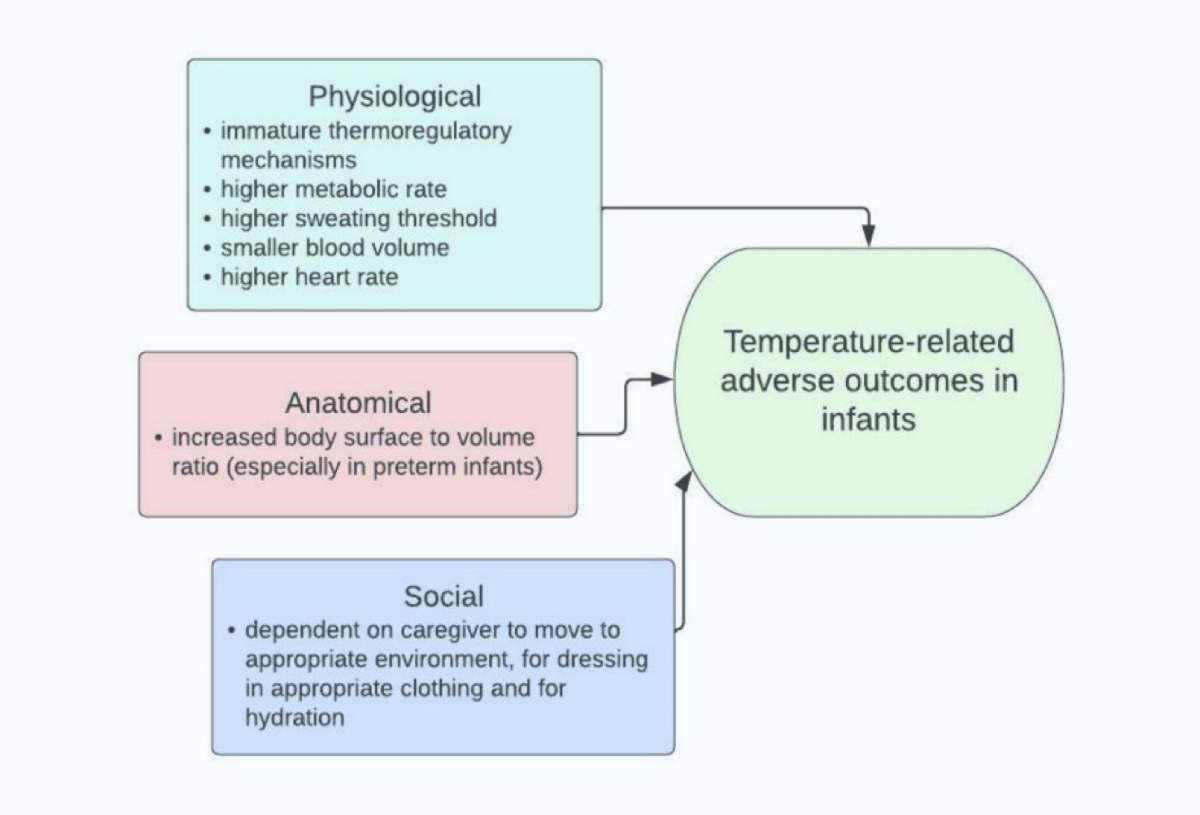
Infants are especially vulnerable to extreme temperatures due to physiological, anatomical, and social factors. This systematic review explored the association between short-term exposure to high and low ambient temperatures and adverse infant outcomes. The study included 26 journal articles, covering outcomes such as infant mortality, sudden infant death syndrome (SIDS), hospital admissions, infectious diseases, and neonatal conditions like jaundice. Findings revealed that higher temperatures were linked to increased risks of infant mortality, hospital admissions, and hand, foot, and mouth disease, while low temperatures were associated with respiratory illnesses and mortality. However, evidence on SIDS was inconsistent, and only five studies focused on low- and middle-income countries. The findings highlight the need for public health measures to mitigate the effects of temperature extremes on infant health, particularly in vulnerable populations.
Read more:
Lakhoo, D. P., Blake, H. A., Chersich, M. F., Nakstad, B., & Kovats, S. (2022). The effect of high and low ambient temperature on infant health: a systematic review. International journal of environmental research and public health, 19(15), 9109.